

Tilt pour, low-pressure and semi-permanent mold castings, from your first prototype to steady production. Send us your drawing and we will recommend the right process for your part.
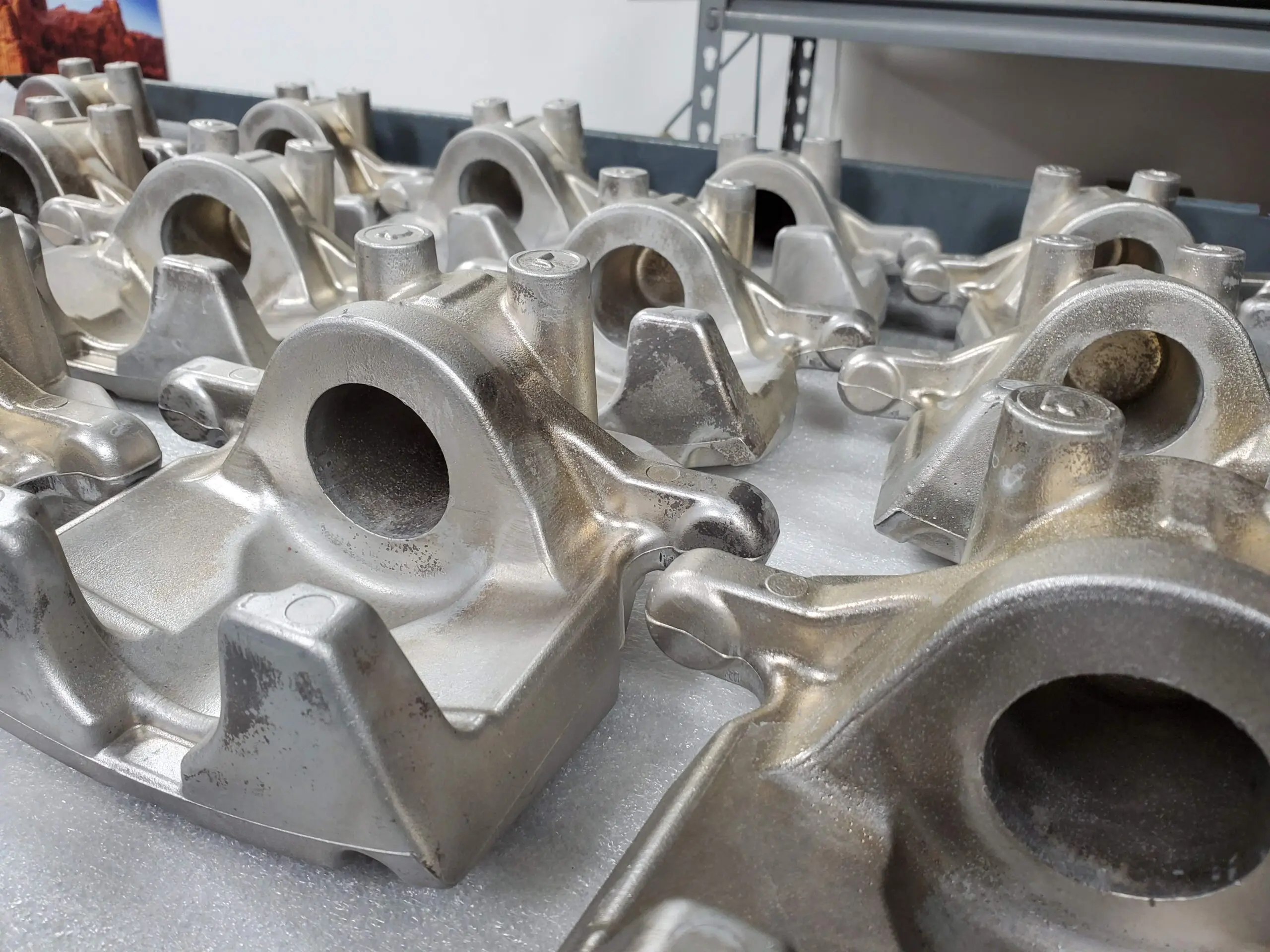
The right process for your parts
Permanent mold casting pours aluminum into a reusable steel tool instead of a new sand mold for every part. You get a better surface finish and tighter tolerances than sand casting, and a much lower cost per part once you are in production. We offer three versions, and we choose between them based on your part’s shape, weight and wall thickness.
- Tilt pour (gravity) permanent mold. The mold tilts and gravity fills it. A good fit for sturdier parts with thicker walls.
- Low-pressure permanent mold. Low pressure pushes the aluminum into the mold, filling thinner walls that gravity alone cannot. Also called low-pressure die casting.
- Semi-permanent mold. The same steel tool, with a sand core placed for each casting to form internal passages and shapes the steel tool cannot.
Not sure which one fits? You don’t need to know. Send us your drawing and our team will tell you.
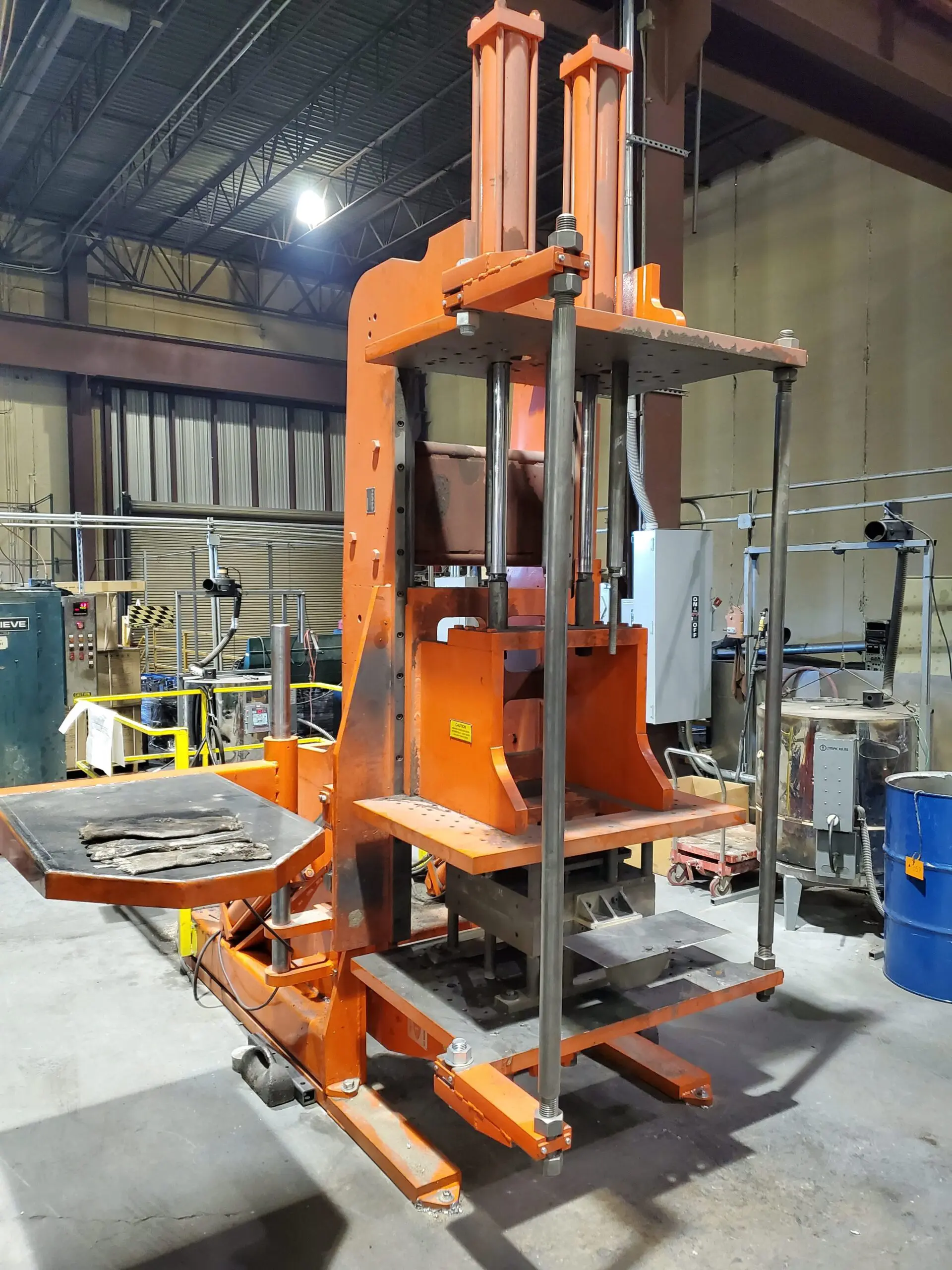
Why buyers choose permanent mold over die casting
Many buyers looking for a production casting search for die casting first, because it is the name they know. Permanent mold is a close relative: we also cut a steel die, we just fill it more slowly. Slower filling means less porosity inside the casting and a more even grain structure, so permanent mold parts are often stronger. If you have been quoting your part as a die casting, send it to us as well and we will tell you whether permanent mold is a better fit.
From prototype to production with one supplier
Many of our permanent mold programs start as prototypes. We can cast your first parts in precision sand or 3D printed sand, and keep supplying parts from a sand tool while your permanent mold tool is being built. When your program moves into production, you stay with the same team.
We cut permanent mold tools in house whenever possible, and you own your tool. Heat treating, chemical analysis and CNC machining are also done in house, so your parts can arrive cast, heat treated and machined.
Example: a medical cart program
A customer came to us with five new castings for a medical cart. We cast their prototypes in sand and supplied repeat orders as their testing went well. When the program moved into production, we moved the parts into permanent mold, which brought the cost of each cast and machined part down from between $250 and $600 to about $100.
Alloys
We pour mostly 356 and 357 aluminum. Other alloys are available, so contact us to ask.
Get a Quote
Send us your drawing. If you can, include the tolerances and surface finish your part needs,
so we can point out anything that would add cost before you commit.
Or call us at (303) 574-0060
