
From Sample to Production: The Permanent Mold Timeline
Buyers moving a part into permanent mold usually have one question after the price: how long? The answer is 12 to 20 weeks to first samples for a new die, and the rest of this guide explains where those weeks go, what happens after samples, and what you can do to keep the schedule from slipping.
The stages
| Stage | What happens | What moves it |
|---|---|---|
| Quote and DFM review | Model reviewed, flow simulation run on most parts, tooling and piece price quoted, alloy and fill method recommended | A complete model and a clear annual quantity |
| Design freeze | DFM changes agreed, drawing revised, tooling released | Fast answers on wall, draft, and radius questions |
| Die design and build | Cavity, gating, cores, cooling, and ejection designed; steel machined and fitted; mold wash applied | Part size, cavity count, sand cores, and tool room load |
| Tryout and first samples | Die preheated and run, gating tuned, first castings poured, heat treated, and inspected | Usually inside the 12 to 20 week window |
| Machining and first article | Fixtures built, samples machined, dimensional report on the CMM | Add 1 to 2 weeks when machining is required |
| Sample approval | Customer checks fit, function, and any required testing | Your review time |
| Production | Release quantities scheduled and run; die serviced between runs | Quantity and current workload |
Where the 12 to 20 weeks go
Most of the time is steel. Designing the die takes days; machining, fitting, and trying it out takes weeks, and any sand core boxes are built in parallel. Hardened steel cuts slowly, which is where most of the spread between 12 and 20 weeks comes from. Tryout is the part that cannot be rushed: the first shots show whether the gating fills the cavity the way the simulation predicted, and a few adjustments to gates, vents, and mold wash are normal before the die is qualified. Heat treating the first samples adds 2 to 3 days, and machining them adds the 1 to 2 weeks on top.
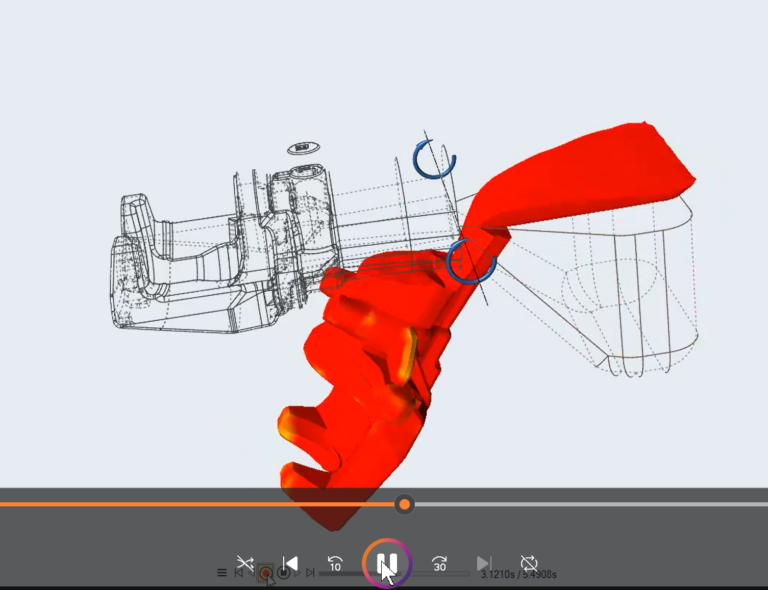
Flow simulation at the quote stage shortens tryout. Fewer surprises in the first shots means fewer adjustments to the die.
What you can do to keep it on schedule
- Freeze the design in sand first. Casting the part in precision sand or printed sand while the design settles means the die is cut once. Changes after steel is cut cost weeks.
- Bridge with a sand tool. A low-production sand pattern costs about $10,000 and feeds real parts while the die is built, which is how most programs at Protocast make the transition.
- Send a complete model. A native CAD file or STEP with the drawing, the alloy, the annual quantity, and the machined features called out. The what to send guide lists it all.
- Answer DFM questions quickly. The review usually comes back with a short list. The die cannot be released until it is settled.
- Decide on testing up front. If the program needs x-ray, pressure test, or tensile bars, say so at the quote so the samples are run that way the first time.
After sample approval
Once samples are approved the program moves onto the production schedule. Release quantities are run against the die, heat treated, machined, and inspected in the same building. Between runs the die is cleaned, inspected, and stored on site. At around 40,000 shots it is refurbished and requalified, which the tooling guide covers. If the design needs a revision later, the tool room can usually modify the die rather than replace it.
What sample approval should cover
First samples are the last inexpensive moment to change anything. A good approval checks four things: dimensions against the drawing, with the CMM report in hand; fit and function in the assembly, ideally with mating parts from production; any required testing, such as pressure, x-ray, or tensile bars, run the way production will run it; and appearance, including parting line, gate, and ejector pin locations on cosmetic surfaces. Approve in writing, and note anything that should change before production even if the sample is accepted as is.
Managing an engineering change after the die is cut
Changes happen. The cost depends on direction. Adding metal to the casting means removing steel from the die, which is a machining operation and usually quick. Removing metal from the casting means adding steel to the die, which means welding and re-machining, and takes longer. Changes on the parting line, to cores, or to the gating are the most involved. Send the revised model, describe what changed, and the tool room will quote the modification and the requalification. Where a change is uncertain, a printed sand casting of the revision can prove it before the die is touched.
A sample schedule
| Week | Milestone |
|---|---|
| 0 | Purchase order for tooling and samples; complete model, drawing, quantity, and test requirements received. Sand tool ordered in parallel if parts are needed in the meantime. |
| 1 to 2 | DFM items closed; die design starts; core boxes designed in parallel |
| 3 to 14 | Hardened steel machined, fitted, and assembled; ejection and cores fitted |
| 15 to 18 | Tryout; gating and coating tuned; first castings poured and heat treated |
| 18 to 20 | Raw sample castings inspected and shipped or held for machining |
| Plus 1 to 2 | Fixtures built, samples machined, CMM report issued |
| After approval | Production releases scheduled by quantity and workload |
Illustrative. Protocast quotes 12 to 20 weeks to first samples; simple dies land early in that range and large or complex dies late.
How Protocast fits in
The timeline is shorter when the foundry, the tool room, heat treat, and the machine shop are in one building, because no stage is waiting on a shipment. Protocast added in-house heat treating in 2013 specifically to take the uncertainty out of lead times, and the same engineering team that reviews the prototype designs the die, so nothing is handed off between stages.
Frequently asked questions about the permanent mold timeline
Can the 12 to 20 weeks be shortened?
Sometimes, for a small, simple die with no sand cores and a frozen design. Ask at the quote. The weeks that are hardest to compress are machining the hardened steel and trying out the die.
Can I get parts while the die is being built?
Yes. That is the standard path at Protocast: a low-production sand tool, typically around $10,000, feeds castings during the 12 to 20 weeks the die takes, and they are often the same parts that proved the design.
What is a first article?
The first production-representative parts, inspected dimensionally on the CMM and against any other requirements on the drawing, with a report for your approval.
What lead time should I plan for production releases?
It depends on quantity and current workload. Ask for it with the quote and plan releases with the foundry so the die is scheduled ahead of need.
What do you need from me at the purchase order?
The final model and drawing, the alloy and temper, the annual and release quantities, critical dimensions, and any testing or certification requirements. The what-to-send guide has the full list.
Do you provide PPAP or first article documentation?
Dimensional first article reports from the in-house CMM are standard. Ask about the specific documentation your program requires at the quote so it is planned in.
Can production start before machining fixtures are done?
Raw castings can be produced and heat treated while fixtures are completed, so the first production release is not waiting on the machine shop.
Send the model. Get a quote with engineering feedback.
Planning a program launch? Send the model and the target date and we will map the schedule back from it.
- Engineering review with every quote
- Flow simulation before tooling is cut
- Cast, heat treated, machined, and inspected in one building
- Permanent mold tooling cut in house whenever possible
