
Gravity Permanent Mold for Aerospace and Defense Parts
Aerospace and defense buyers ask a different set of questions. Not just can you make it, but can you prove it, can you repeat it, and can you protect it. Permanent mold casting answers the first two well, and the way a foundry is set up answers the third. This guide covers what gravity permanent mold offers for aircraft and defense hardware, which parts fit Protocast, and which do not.
Which parts fit
Protocast is selective about aerospace work, on purpose. It makes castings that go on aircraft, but not the ones that hold the aircraft in the air. Cockpit trim, housings and components for aircraft air conditioning systems, enclosures, brackets that are not primary structure, and defense hardware that lives on the ground are the right fit. Landing gear components and other flight-critical structure are not. Protocast does not carry the insurance or want the liability for flight-critical parts, and most customers who need them require AS9100 in the supply base, which Protocast does not hold. Its ISO 9001:2015 certification satisfies general manufacturing and most defense programs, and its ITAR registration covers controlled work.
| Good fit | Not a fit |
|---|---|
| Cockpit and cabin trim castings Aircraft air conditioning and environmental system components Electronics enclosures and housings Secondary brackets and covers Ground support and defense equipment Legacy and obsolete part reproduction | Landing gear components Primary airframe structure Any part classed as flight critical Programs that require AS9100 certification |
Why permanent mold suits the work
- Mechanical properties. The steel die pulls heat quickly, refining the grain. Permanent mold 356-T6 and 357-T6 castings test higher than sand castings in the same alloy, with less internal porosity and a more homogeneous structure than high pressure die castings.
- Repeatability. Every casting comes from the same cavity. Once the die is qualified, dimensions and machining stock stay consistent for the life of the tool, which simplifies first article and lot-to-lot inspection.
- Heat treatable, weldable alloys. Unlike high pressure die castings, permanent mold castings are heat treated to T6 and can be weld repaired where the specification allows.
- Volumes that fit. Aerospace and defense quantities are often hundreds to low thousands a year, well inside the permanent mold range and below what most die casters will take.
Alloys
356 covers most housings, brackets, and enclosures. 357, with more magnesium and tighter chemistry, is the usual specification when the part is strength critical; its minimum tensile strength in permanent mold is 45,000 psi against 33,000 psi for 356. The alloy guide has the full comparison. Both are heat treated in house, chemistry is verified on Protocast’s own spectrometer, and tensile test bars are cast with the parts and tested when the specification requires certified properties.
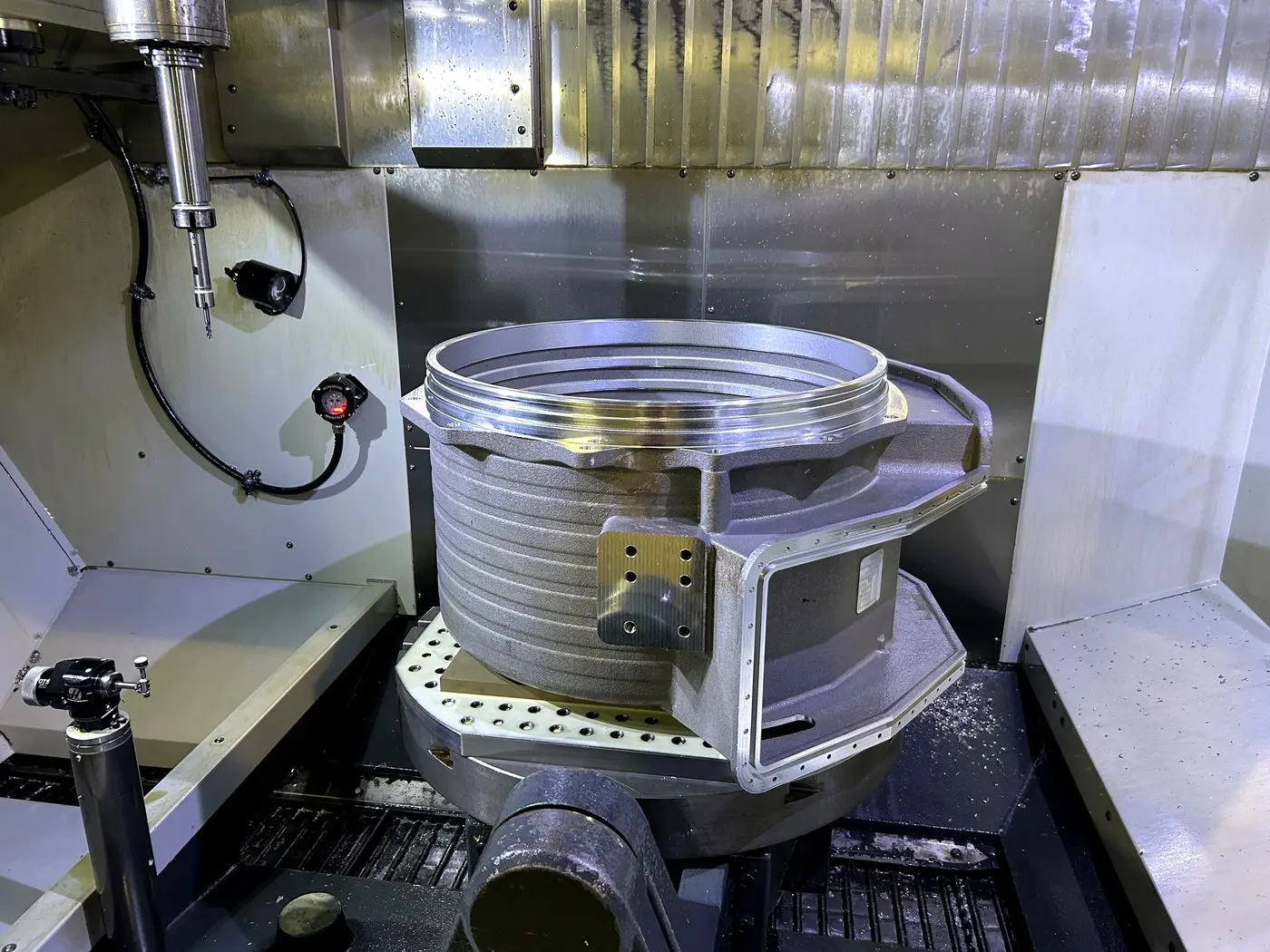
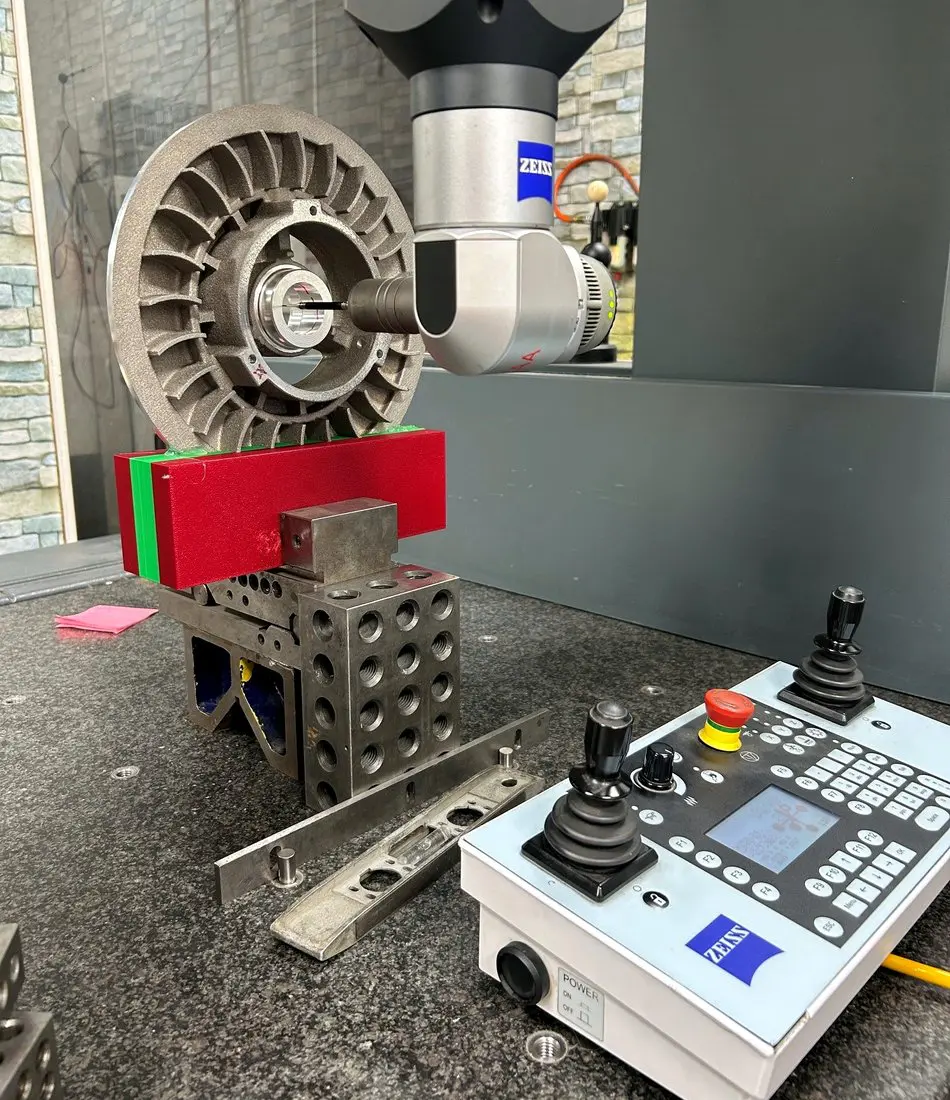
Castings are machined on eight CNC machines in the Protocast shop and checked on the CMM before they ship.
Inspection and testing
Dimensional inspection runs on Protocast’s in-house CMM. Beyond that, the testing a program calls for is arranged as part of the quote:
| Requirement | Available |
|---|---|
| Chemistry | In-house spectrometer; certification supplied |
| Mechanical properties | Tensile test bars cast with the parts and tested; certified results supplied |
| Dimensional | In-house CMM; first article reports |
| Radiographic | X-ray inspection to the specified acceptance level |
| Surface | Fluorescent penetrant inspection |
| Pressure and leak | To customer-defined procedures |
| Other | Ultrasonic, hardness, and sectioned examination when required |
Tell Protocast the specification at the quote so the test plan and paperwork are built in from the start.
Paperwork and control
Aerospace and defense programs carry far more documentation than commercial work, and that is part of what makes them different, not a problem. Protocast is ISO 9001:2015 certified and ITAR registered. Tooling is cut in the building whenever possible and stays at the foundry. Casting, heat treating, and machining happen in the same 55,000 square foot facility, which keeps the part and its records under one system from melt to shipment. Nearly half of the staff hold engineering degrees, and the engineering team supports reverse engineering, 3D CAD modeling, and flow simulation for legacy parts and new designs alike.
Legacy and obsolete parts
Defense programs run for decades and the original tooling does not always survive. Protocast reverse engineers parts from samples or drawings, models them in 3D, and either repairs and modifies old tooling or builds new. For very low quantities, printed sand casting can reproduce a part with no hard tooling at all, and the same model can move to a permanent mold die if the program grows.
What a program typically requires, and how it is handled
| Requirement | How Protocast handles it |
|---|---|
| Alloy certification | Chemistry verified on the in-house spectrometer; certification supplied |
| Mechanical properties | Tensile test bars cast with the parts and tested; T6 heat treatment in house |
| Radiographic acceptance | Radiographic testing available; casting designed and simulated for soundness |
| Dimensional first article | In-house CMM |
| Pressure or leak test | To customer-defined procedures |
| Surface inspection | Fluorescent penetrant inspection available |
| Traceability | ISO 9001:2015 quality system; casting, heat treat, machining, and inspection under one roof |
| Export control | ITAR registered |
| Tooling location | Cut in house whenever possible; the die stays at the foundry |
Casting classes and designated areas
Aerospace casting specifications often assign a class and grade that set the level of radiographic acceptance and the mechanical properties required in designated areas of the casting. The highest classes belong to flight-critical structure, which Protocast does not take. For the classes that apply to trim, environmental system, and secondary parts, the requirements still shape the process: gating and risers are placed so the designated areas are the soundest, heat treatment is controlled to reach the properties in those sections, and the first article includes the tests that prove it. Share the specification at the quote, because a casting designed to a general commercial standard and then held to an aerospace class will not pass, and one designed to the class from the start usually will.
Weight, and why it points to permanent mold
Every ounce on a flight part is paid for over the life of the aircraft. Permanent mold’s finer grain and higher properties let the designer use thinner walls than sand for the same strength, and its repeatability means less machining stock carried on every part. Low pressure extends the same logic to thin-wall structural housings. Compared with a hogout from plate, a near-net casting removes most of the machining time and the scrap.
How Protocast fits in
Send the drawing, the specification, the annual quantity, and the testing requirements together. If the part is flight critical or the program requires AS9100, Protocast will say so quickly rather than tie up your quote. If it fits, the quote will address alloy, fill method, heat treatment, machining, and the inspection plan as one package. Protocast has served aerospace, defense, medical, and industrial customers from Colorado since 1995.
Frequently asked questions about aerospace and defense castings
Are you ITAR registered?
Yes. Protocast is ITAR registered and ISO 9001:2015 certified.
Are you AS9100 certified?
No. Protocast holds ISO 9001:2015, which satisfies most general manufacturing and defense programs. Programs that require AS9100 in the supply base are not a fit.
Do you make flight-critical parts?
No. Protocast makes non-flight-critical aircraft parts such as cockpit trim and air conditioning system components, and defense hardware. Landing gear and primary structure are not taken.
Can you provide material certifications and test reports?
Yes. Alloy chemistry is verified on an in-house spectrometer, and tensile test bar results, radiographic reports, and other documentation are provided when a program requires them.
Where is the tooling made?
Protocast cuts permanent mold dies in its own tool room whenever possible, and uses domestic tooling partners when needed. The die stays at the foundry.
Do you machine the castings?
Yes. Protocast machines its own castings on eight CNC machines in the same building.
Do you cast to AMS or MIL specifications?
Protocast works to customer drawings and specifications. Share the specification at the quote so the process, testing, and documentation are planned to it.
Can you handle low quantities on aerospace parts?
Yes. Many aerospace and defense programs run hundreds of pieces a year, which is within the permanent mold range, and printed sand covers development and very low quantities.
Where is the work performed?
In Commerce City, Colorado. Casting, heat treating, machining, and CMM inspection are performed under Protocast’s own roof, and the testing a program requires is arranged as part of the quote.
Send the model. Get a quote with engineering feedback.
Have an aerospace or defense casting to quote? Send the drawing and the specification and we will tell you quickly whether it fits, and build the plan around it if it does.
- Engineering review with every quote
- Flow simulation before tooling is cut
- Cast, heat treated, machined, and inspected in one building
- Permanent mold tooling cut in house whenever possible
