

Sand Casting for Prototypes and Short Runs: Precision Sand and Printed Sand
Sand casting is where most programs at Protocast begin. A pattern is machined from urethane modeling board, fine grain sand bonded with a two-part urethane binder is packed around it, and the mold is poured once and broken away. Tooling is inexpensive and fast, so a first casting can be in hand in days, and the process handles larger and thicker-walled parts than any steel die. Printed sand takes the pattern out entirely. This guide covers both, how each mold is made, what they are for, and how a sand casting becomes a production program.
Two ways to make the mold
Precision sand, also called no-bake or air-set, uses a machined pattern and a chemically bonded sand that sets hard at room temperature in about 20 to 30 minutes. The rigid mold gives a better finish and tighter tolerances than green sand and supports Protocast’s largest castings. Every sand casting at Protocast that is not printed is precision sand; the foundry does not run green sand. The precision sand guide explains the difference.
Printed sand removes the pattern entirely. The mold is printed directly from the CAD file, which means no hard tooling, molds in as little as 5 days, and geometry that once required investment casting: complex cores, undercuts, and internal passages. Molds up to about 70 by 39 by 27 inches print in one piece. Printed sand replaced investment casting at Protocast and is now the standard route for complex low-volume parts. The printed sand guide goes deeper.
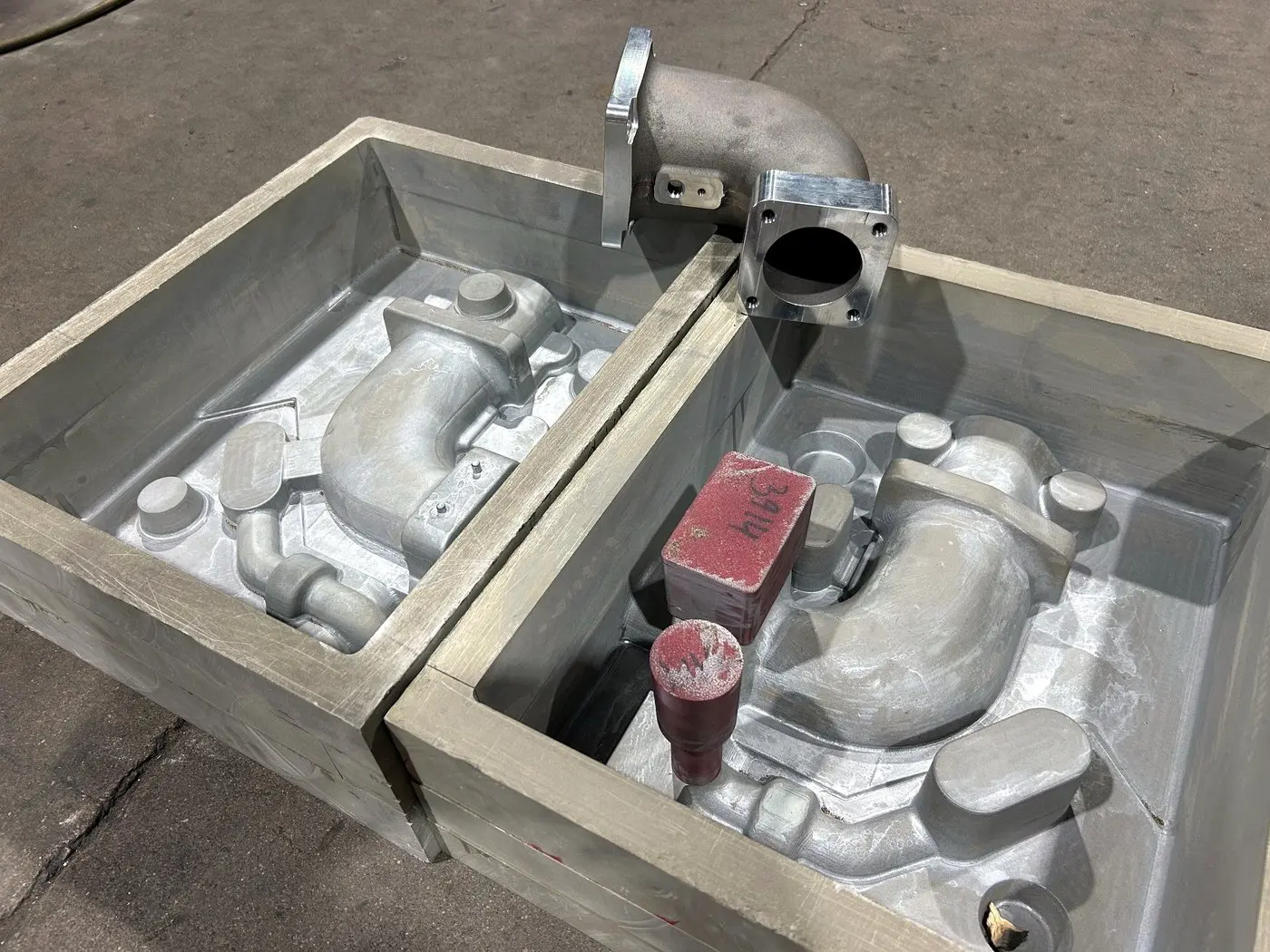
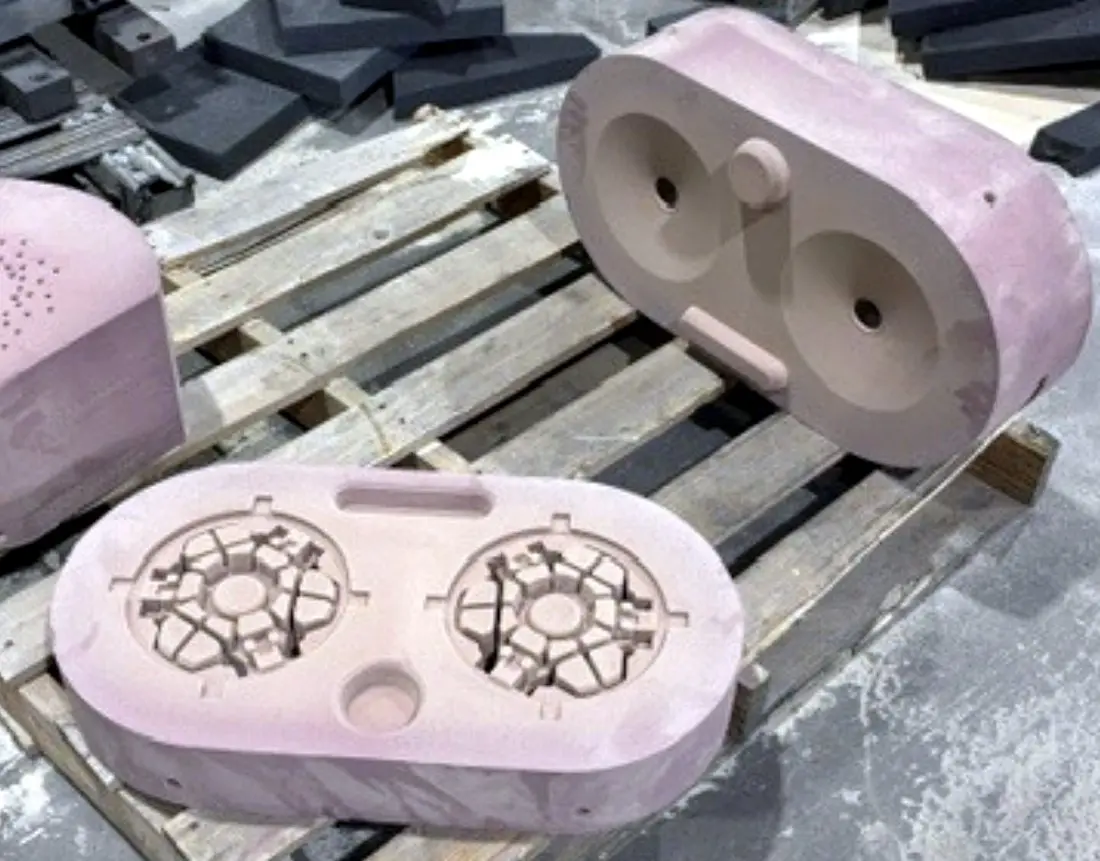
Left: an air set sand pattern with the machined casting it produced. Right: a printed sand mold, both halves, with the cavity, gating, and cores printed straight from the CAD file.
How a precision sand casting is made
- Engineer the mold. Metal shrinkage, gating, and risers are designed into the mold, and solidification is simulated in software before anything is cut.
- Cut the pattern. A positive of the casting is machined into urethane modeling board on a CNC mill, a practice Protocast adopted in 2005. Patterns typically last about 500 pieces.
- Make the mold. Fine grain sand mixed with a two-part urethane binder runs through a continuous mixer and is packed against the pattern. The binder sets in 20 to 30 minutes.
- Assemble. Mold halves are stripped from the pattern, cores are set, and the mold is closed.
- Pour and cool. Aluminum or zinc is poured and the casting cools to room temperature.
- Shake out, trim, clean. The sand is broken away and reclaimed (about 80 percent is reused), gates and risers are removed, and the casting is cleaned by hand.
- Heat treat, machine, inspect. T6 in house in 2 to 3 days, machining in the same shop, CMM inspection.
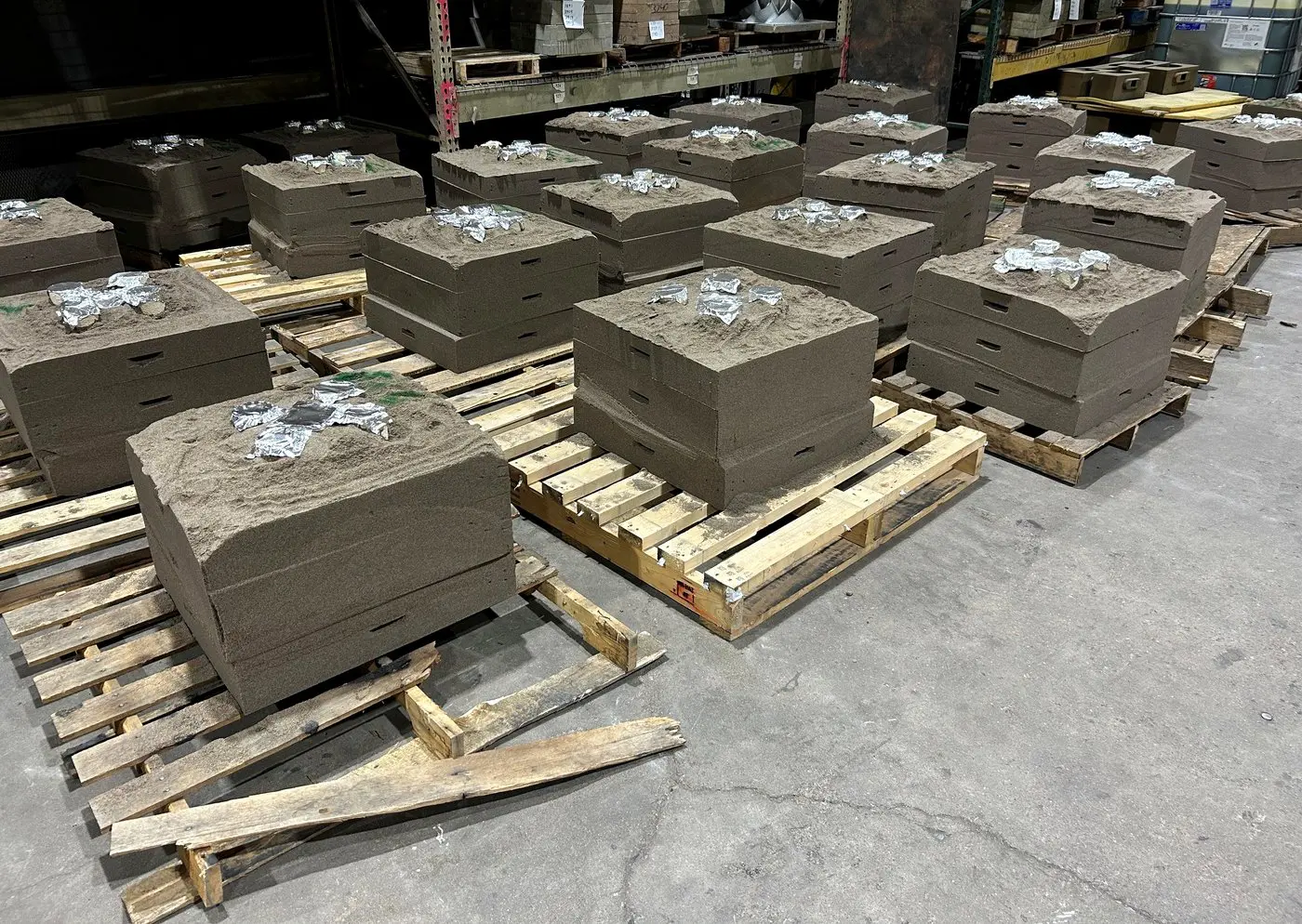
Assembled no-bake molds on the floor at Protocast, ready to pour. Each one is used once and broken away from the casting.
How a printed sand casting is made
- Design the mold digitally. Cavity, gating, risers, and cores are modeled as one file or a few pieces that assemble. No draft is needed because nothing is drawn from the sand.
- Print. The printer spreads a thin layer of sand, deposits binder where the mold is solid, drops the bed, and repeats until the mold is complete.
- Depowder and assemble. Loose sand is removed and the mold pieces are assembled.
- Pour, cool, shake out. The same foundry, the same alloys, the same heat treat and machine shop as a precision sand casting.
Precision sand and printed sand, side by side
| Precision sand (no-bake) | Printed sand | |
|---|---|---|
| Tooling | Machined pattern; about 500 pieces per pattern | None; mold printed from CAD |
| First parts | In as little as 3 days for rapid work; 4 to 6 weeks typical for samples | Molds in as little as 5 days |
| Best for | Prototypes, short runs, large parts, thick walls | Complex geometry, undercuts, cores; parts too large for wax patterns |
| Best quantity | Dozens to a few hundred a year; production for large or low-volume parts | One to a few hundred |
| Mold size | Very few size limitations | Up to about 70 by 39 by 27 inches per mold |
| Draft | Required | Not required |
| Surface finish | 350 to 450 rms | Consistent with traditional sand; tolerances closer to air-set sand |
| Minimum wall | Typically 0.160 inch, exceptions possible | |
| Design changes | Modify or recut the pattern | Edit the file and print again |
Figures are typical and depend on geometry and workload.
What to expect from a sand casting
| Item | Typical at Protocast |
|---|---|
| Tool life (precision sand) | Approximately 500 pieces, dependent on geometry, draft, and radii |
| Surface finish | Typically 350 to 450 rms |
| Minimum wall | Typically 0.160 inch; exceptions possible |
| Tolerances | Aluminum Association Standards for Aluminum Sand and Permanent Mold Castings |
| Sample lead time | Typically 4 to 6 weeks for raw castings; add 1 to 2 weeks for machining |
| Alloys | Aluminum (356, 357 and others) and zinc |
| Heat treatment | T6 in house, typically 2 to 3 days |
Designing for sand casting
Sand is forgiving, but the same principles that make a good permanent mold part make a good sand casting: uniform walls, no sharp inside corners, and machining stock on faces that need it. Precision sand needs draft so the pattern can be drawn, typically a degree or two; printed sand needs none. Minimum wall is about 0.160 inch. Cores can form almost any interior, and in printed sand they are part of the mold. If the part is headed for permanent mold, design the sand prototype to the permanent mold rules (more draft, radii everywhere, walls of 0.125 inch or more) so the move to a die is a tooling order, not a redesign.
Common defects and how they are prevented
| Defect | Cause | Prevention |
|---|---|---|
| Shrinkage | Heavy section not fed | Riser design from solidification simulation |
| Gas porosity | Hydrogen in the melt; moisture or binder gas | Clean melt practice; dry, well-vented molds |
| Sand inclusions | Mold erosion during the pour | Rigid no-bake mold; gating that does not impinge on the sand |
| Misrun | Thin section froze early | Wall thickness at or above 0.160 inch; gating and pour temperature |
| Dimensional variation | Mold movement | Rigid precision sand rather than green sand; pattern maintenance |
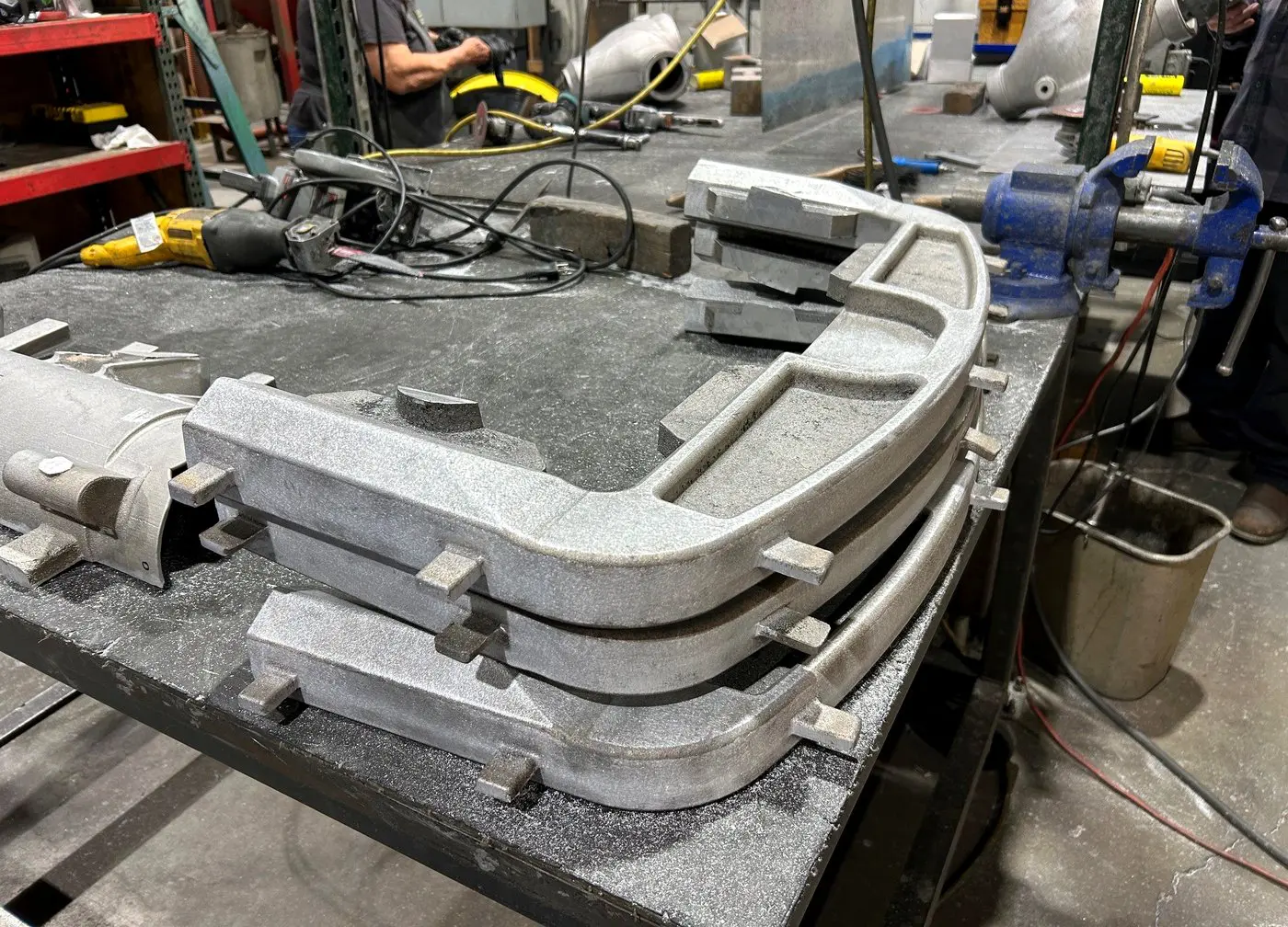
After shakeout the gates and risers are cut away and the castings are cleaned before heat treat and machining.
Sand as the on-ramp to production
Because sand tooling is cheap to change, it is the right place to prove a design. Engineering reviews prototype castings with the production process in mind, so when volume arrives the part moves to permanent mold without a redesign. That is the prototype-to-production path, and the sand versus permanent mold guide shows where the crossover sits, usually around 300 to 500 pieces a year. Protocast will also cut a low-production sand tool to feed parts while the permanent mold die is being made over 12 to 20 weeks, so a program never waits on the die. For parts that stay large, thick-walled, or low volume, precision sand carries a program into production on its own; Protocast expanded its sand line in 2015 specifically to run production quantities.
Applications
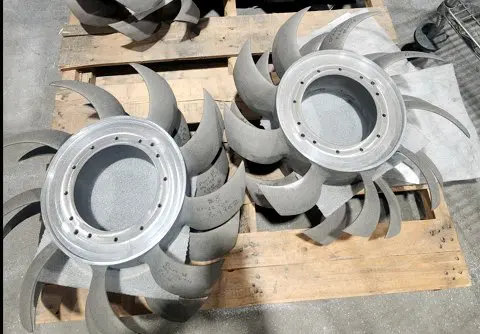
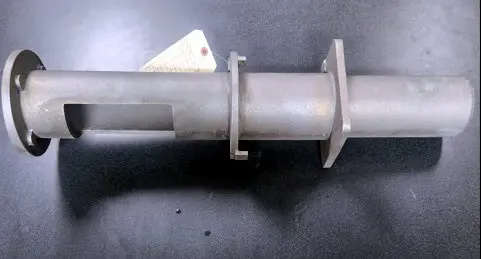
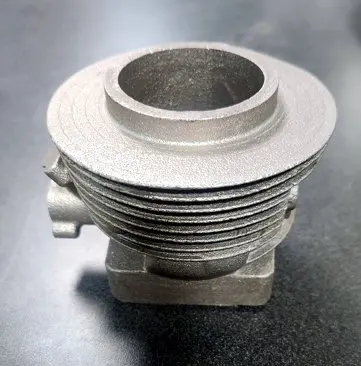
Prototypes of every kind, from a single functional part to pilot runs. Large housings, frames, and bases too big for a die. Thick-walled industrial and hydraulic parts. Legacy and obsolete parts reproduced from a scan or drawing with no tooling. Complex fluid-handling parts with internal passages, in printed sand. Short production runs where the pattern’s 500-piece life covers the program. Industries include aerospace, defense, medical, oil and gas, robotics, industrial equipment, and automotive.
Terms you will see
- No-bake / air-set / precision sand
- Resin-bonded sand that hardens at room temperature; the process Protocast runs.
- Green sand
- Clay-bonded damp sand used in high-volume commodity foundries; not used at Protocast.
- Pattern
- The positive of the casting, cut in modeling board, that the sand mold is formed around.
- Core
- A sand shape set in the mold to form an internal passage or pocket.
- Core print
- The extension of a core that locates it in the mold.
- Binder jetting
- The printing method that deposits binder into layers of sand to build a printed mold.
- Reclaim
- Recovering and reusing sand after shakeout; Protocast reuses about 80 percent.
- Riser
- A reservoir that feeds the casting as it shrinks; removed after cooling.
How Protocast fits in
Sand casting is where Protocast grew up. The company was founded in 1995 as Prototype Castings, added precision sand in 2005 with a Tinker Omega continuous mixer, expanded the line in 2015 with a larger dual-hopper mixer, automated controls, and mechanical reclaim, and has offered printed sand casting since 2017. Three CNC machines in the shop are kept for cutting sand pattern tooling only, because the pattern board throws dust that would contaminate the coolant on the machines that cut steel. Send a model and a quantity, and the quote will say whether precision sand, printed sand, or a permanent mold die is the right route.
Frequently asked questions about sand casting
What is precision sand casting?
Sand casting with a fine grain sand bonded by a two-part urethane resin that hardens at room temperature, using a pattern cut from modeling board. Also called no-bake or air-set. It gives a better finish and tighter tolerance than green sand.
What is printed sand casting?
Sand casting where the mold is printed directly from the CAD file with no pattern, using a binder deposited into layers of sand. It suits complex geometry and low volumes.
What is the expected tool life of sand cast tooling?
Approximately 500 pieces, dependent on geometry, proper draft, radii, and similar factors.
What tolerances can I expect with sand casting?
Protocast follows the Aluminum Association Standards for Aluminum Sand and Permanent Mold Castings; critical features are machined.
What is the typical surface finish for sand casting?
Typically 350 to 450 rms.
What is the minimum wall thickness for sand castings?
Typically 0.160 inch, but exceptions are possible depending on geometry.
What are typical lead times for sand cast samples?
Typically 4 to 6 weeks for raw castings, with rapid options in as little as three days for the right part. Add 1 to 2 weeks for secondary machining.
How large a casting can you make in sand?
Precision sand has very few size limitations; printed molds go up to about 70 by 39 by 27 inches and can be assembled in sections.
Can a sand casting be used for production?
Yes. Precision sand runs production quantities for large, thick-walled, or lower-volume parts; from roughly 300 to 500 pieces a year, permanent mold usually costs less per piece.
Does Protocast still offer investment casting?
No. Investment casting was discontinued in 2026 and replaced by printed sand casting, which handles the same complex geometry without wax patterns or shells and supports larger parts.
Do you pour steel or iron?
No. Protocast is a non-ferrous foundry pouring aluminum and zinc.
Send the model. Get a quote with engineering feedback.
Need a first casting fast? Send the model and we will tell you whether precision sand or printed sand gets there sooner.
- Engineering review with every quote
- Flow simulation before tooling is cut
- Cast, heat treated, machined, and inspected in one building
- Permanent mold tooling cut in house whenever possible
