
Aluminum Castings for Medical Equipment
Medical equipment makers come to Protocast for the aluminum castings that go into the equipment around the patient: carts, monitor mounts, housings, frames, and handles. These are parts where appearance, strength, and repeatability matter, and where a program often starts as a handful of prototype sets and grows into steady production. This page explains how Protocast handles that path and what to send for a quote.
What Protocast makes for medical equipment
- Cart and stand components. Handles, bases, columns, and brackets for mobile carts and workstations.
- Monitor and display mounts. Tubes, arms, and mounting hardware that carry a screen and need to stay rigid.
- Housings and enclosures. Covers and housings for equipment electronics, often with thin walls and cosmetic surfaces.
- Display bezels. Bezels for medical consoles, where the casting is the face of the machine.
- Frames and structural parts. Heat treated to T6 where the part carries load.
The castings go into equipment, not into people. Protocast does not produce implants, surgical instruments, or other patient-contact parts, and it is not ISO 13485 certified. If your quality system requires the casting supplier to hold ISO 13485, say so at the quote so there are no surprises.
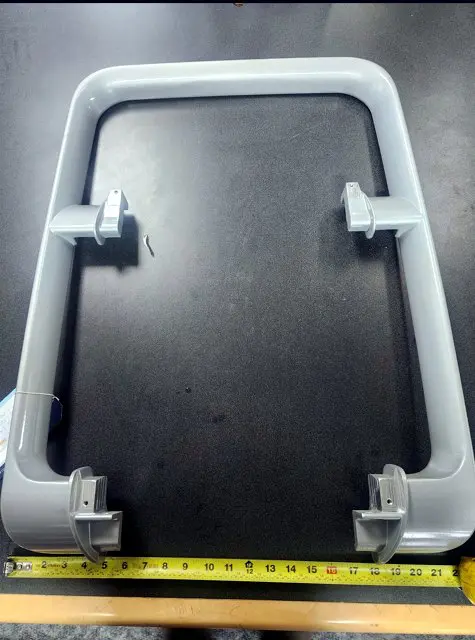
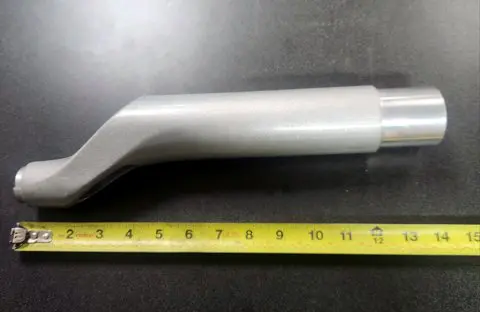
Left: Medical cart handle. Tilt pour permanent mold, powder coated, about 20 lb, about 1,000 a year. Right: Medical monitor tube. Low pressure permanent mold, powder coated, about 2 lb, about 1,000 a year.
How one medical cart program grew
A medical device company came to Protocast with five new castings for a cart and an order for 14 prototype sets. Protocast cut five sand tools at $6,000 to $10,000 each, cast and machined the parts, and the customer built and tested its prototype machines. A few months later the order was 50 sets, then 200, each time off the same sand tools.
When the customer was ready to commit to 1,500 sets, the conversation turned to permanent mold. Dies for the five parts ran $50,000 to $80,000 each, and the cast and machined part price came down from the $250 to $600 range in sand to roughly $100. The tooling paid for itself within the first thousand or so pieces, and the program has run at around a thousand parts a year since. The full numbers are in Permanent Mold vs. Sand Casting.
That pattern is common in medical equipment: low volumes at first, a design that changes during testing, and then a stable design that runs for years. Sand and printed sand suit the first stage because design changes are cheap. Permanent mold suits the second because the part price drops and every casting comes from the same cavity.
Choosing a process
| Stage | Process | Why |
|---|---|---|
| First prototypes | Printed sand | No hard tooling |
| Prototype sets and early builds | Precision sand | Low tooling cost; easy to change the pattern when the design moves; samples typically in 4 to 6 weeks |
| Steady production | Tilt pour or low pressure permanent mold | Lower part price, better surface, and consistent dimensions from a steel die; first samples typically 12 to 20 weeks from tooling release |
Typical figures. Part size and complexity move them.
What matters on medical equipment parts
Cosmetic surfaces. Carts and enclosures are seen and touched by clinicians every day, and they are usually painted or powder coated. The finish has to be smooth enough that nothing snags clothing or cuts skin. The cosmetics have to match a high-value machine, and the whole machine has to pass regulatory approval. Permanent mold gives a cleaner as-cast surface than sand, which means less finishing before coating. Mark the cosmetic faces on the drawing so gating and parting lines can be placed away from them. Anodize, powder coat, and chem film are offered through local finishers.
Strength and stiffness. Handles and monitor arms carry load and get leaned on. Permanent mold castings in 356 or 357 can be heat treated to T6 in house, and the 356 vs. 357 guide covers when each alloy makes sense.
Repeatability and records. Medical customers usually want the same part every time and the paperwork to show it. Protocast verifies alloy chemistry on its in-house spectrometer, checks dimensions on an in-house CMM, and supplies first article inspection reports and material certifications. See Inspection and Testing.
Machining. Most cart and mount castings need machined bores, faces, and threaded holes. Protocast machines castings in house on CNC equipment, so the casting and the machined part are quoted, made, and inspected in one place.
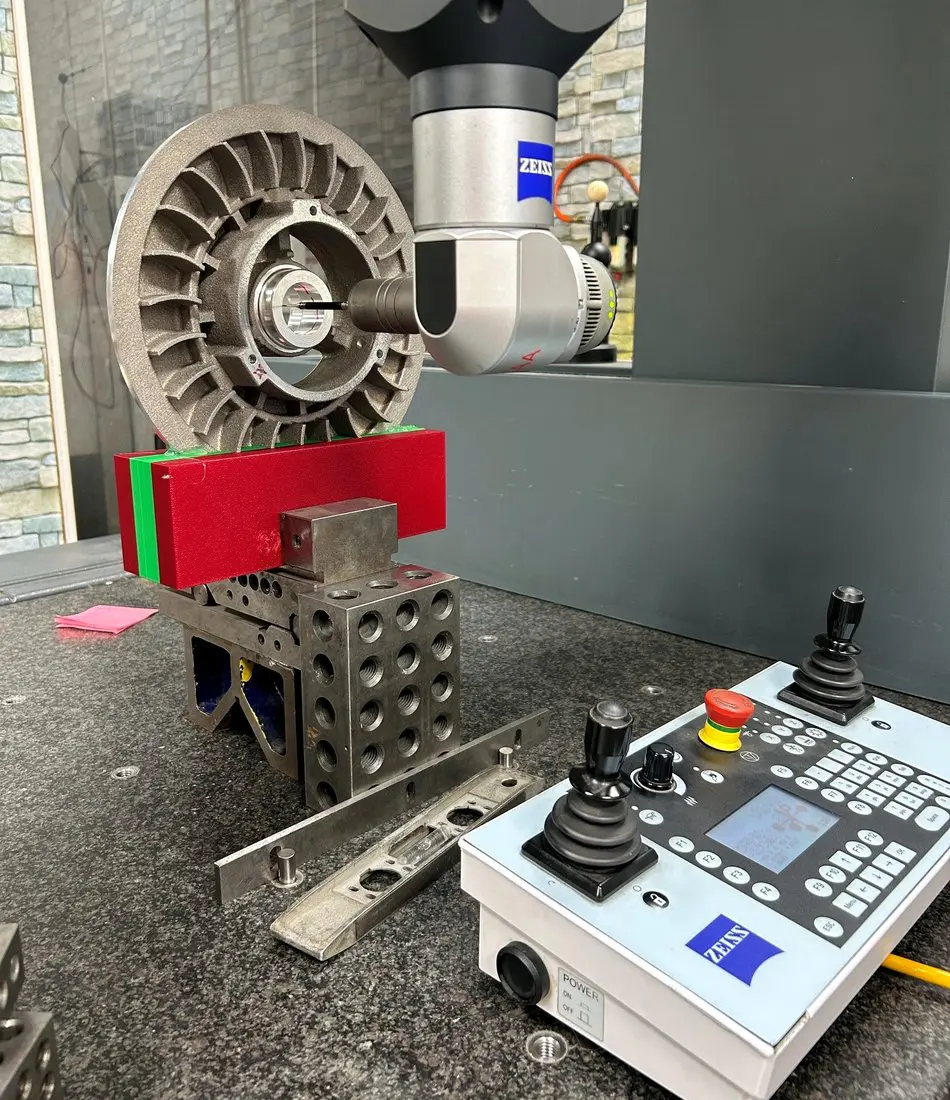
Dimensional inspection on the in-house CMM.
What to send for a quote
- A 3D model (STEP is ideal) and a drawing with tolerances and the cosmetic faces marked.
- Prototype quantity, expected annual volume, and how firm the design is.
- Alloy and temper, if specified, and the finish (paint, powder coat, anodize).
- Inspection and documentation requirements, including any supplier quality requirements from your quality system.
The prototype checklist has more detail.
Frequently asked questions
Does Protocast make medical implants or patient-contact parts?
No. Protocast casts aluminum components for medical equipment, such as carts, mounts, housings, and frames. It does not make implants, surgical instruments, or parts that contact the patient.
Is Protocast ISO 13485 certified?
No. Protocast is ISO 9001:2015 certified. Equipment makers whose quality systems require ISO 13485 from casting suppliers should raise it at the quote.
Can I start in sand and move to permanent mold later?
Yes, and that is how many medical equipment programs run. The same model is used for both, and the design is reviewed for permanent mold before the die is cut.
What volumes make permanent mold worth it?
Often a few hundred to a thousand parts a year is enough, depending on the part. In the cart program above, about a thousand parts a year paid back $50,000 to $80,000 dies.
Can the castings be painted or powder coated?
Yes. Aluminum castings take paint and powder coat well, and permanent mold surfaces need less preparation than sand. Anodize, powder coat, and chem film are offered through local finishers.
Send the model. Get a quote with engineering feedback.
Building a new medical cart, mount, or housing? Send the model with the prototype quantity and expected annual volume, and the quote will lay out the path from first parts to production.
- Engineering review with every quote
- Flow simulation before tooling is cut
- Cast, heat treated, and machined in one building
- Permanent mold tooling cut in house whenever possible
